By Tunde Rahman
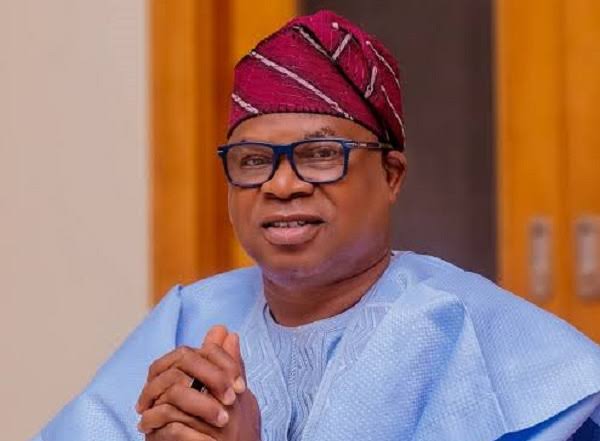
With just a few days before the August 15 Osun State governorship election, the political calculus is already shifting. The election is a two-way horse race between incumbent Governor Ademola Nurudeen Jackson Adeleke of the Accord Party and his challenger, the All Progressives Congress candidate, Asiwaju Munirudeen Bola Oyebamiji – popularly branded as AMBO.
While no election is won on paper, three key factors – party structure, voter disenchantment with the incumbent, and the imperative of alignment with the centre – will likely determine where the pendulum swings.
APC in Osun has spent the last two years rebuilding and recalibrating ward by ward. Typically, after an electoral loss, political parties’ structure tends to become amorphous. But after losing in 2022, APC did what losing parties rarely do: it stayed on the ground, with its key leaders and foot-soldiers turning themselves into irritant opposition to the Adeleke government.
AMBO’s campaign has leveraged that structure. Local government chairmen, former House of Assembly members, former councillors, and youth leaders have been harmonised under one unit. That way, the party successfully mustered the support of its members as a collective. In a state where elections are often decided by 2,000–5,000 votes per LGA, that machinery matters.
By contrast, the incumbent Governor Adeleke was hobbled and weakened by visible internal factions within his People’s Democratic Party, which led to his exit from the party. Even the Accord Party, to which he ran for refuge, suffered a leadership crisis and has been in and out of court. Also, the rift between the Governor’s camp and some federal lawmakers, leading to the exit of two Senators and some House of Representatives members from the PDP to the APC, has not healed, and it is showing in voter mobilisation.
Governor Adeleke holds tight to civil servants who usually wield considerable influence in Osun elections. But he has lost control over the local councils, while the state chapter of the National Union of Road Transport Workers remains fragmented.
The Adeleke administration came in on a wave of goodwill in 2022 spurred by the salary hangover from previous APC administrations. By early this year, however, that goodwill is being tested by allegations of maladministration, exemplified by nepotism, lopsided infrastructure distribution, inflated contracts, and poor-quality projects.
After four years of the governor’s known shenanigans, voter allegiance is gradually changing. And Osun voters are known to be pragmatic.
Oyebamiji rode into Osun State public service on a high note, joining the former Governor Rauf Aregbesola administration as Managing Director of the dying Omoluabi Investment Company, which he successfully recapitalised. He was later appointed Commissioner for Finance in the administration of Governor Isiaka Adegboyega Oyetola, who succeeded Aregbesola. The APC candidate stepped down as Managing Director of the National Inland Waterways Authority to vie for the Osun governorship seat. He is positioning himself as the new alternative to Adeleke. Oyebamiji is a technocrat with private sector credentials. He promises to create jobs, revive agriculture, and ensure fiscal discipline.
Next Saturday’s election is an off-cycle election, and in Nigeria, off-cycle elections are rarely isolated from Abuja, the seat of power, because all attention is focused on it. President Bola Tinubu’s APC controls the centre and most states, whose governors have unleashed intense voter mobilisation and a crackdown against Governor Adeleke. Also, the Renewed Hope Agenda has, as expected, turned into a campaign frame in Osun, offering more federal projects, more roads, more student loans, and more support for sub-nationals that align with the centre.
For swing voters and traditional rulers, it’s inconceivable that they would be indifferent to the array of federal projects being implemented in Osun State. Alignment with the federal government is increasingly being seen as access to resources and more Renewed Hope Agenda projects. That argument is resonating, especially in Osun West and Osun Central, where federal roads and health projects have been launched in 2026. Construction work is progressing on the Ibadan-Ife-Ilesa highway. Only last Thursday, the reconstruction of the Ibadan-Iwo-Osogbo road, a state road now taken over by Abuja, was inaugurated by the Minister of Works, Senator Dave Umahi, joined by former Osun governor and Minister of Marine and Blue Economy, Adegboyega Oyetola.
In my view, five major towns, including Osogbo, Ilesa, Ife, Iwo, and Ede, will decide this election.
Osogbo is a swing, urban, and media-driven Local Government Area. Whoever wins the narrative here wins the momentum.
Ilesa is APC’s traditional base. Turnout will be key here in determining the vote tally even as a son of the soil, former governor Aregbesola, is sponsoring the candidacy of his former House of Assembly Speaker, Hon. Najeem Salam, on the African Democratic Congress platform.
The electoral map in Iwo, which though gave APC a narrow lead in the 2022 election, and tilted towards Governor Adeleke’s Accord Party a few months ago, is now moving towards AMBO. Last week in Iwo, the pro-AMBO sentiment was apparent when I visited.
Same with Ife, where a mammoth crowd welcomed Oyebamiji during his campaign outing in the city.
Ede, being Adeleke’s hometown, remains his stronghold, but the margin of victory there can shrink in Ede North and Ede South in the days leading to the poll.
Voter turnout will also be decisive. Osun people vote when they believe their vote counts. The APC’s message of “protect your vote” has struck a chord among youth groups, just like Accord Party’s posturing as the underdog and its appeal to voters to turn out en masse and not be intimidated in any way.
Barring any major upset, a last-minute scandal, or a massive voter suppression effort, Asiwaju Oyebamiji and the APC are going into the August 15 election with some advantage.
They have the structure, they have the momentum of a ruling party at the centre, and they are running against an incumbent burdened by governance headwinds.
The Economic and Financial Crimes Commission’s freeze of the accounts of the Adeleke government slowed down the APC momentum and won sympathy for the Accord Party but the order was quickly reversed.
One of the opinion polls released on Thursday pointed out that the freezing of the accounts resulted in a little drop in the APC momentum and gave Accord a temporary bounce, which could not be sustained as the order was reversed.
The poll was based on a largest event sampling of roughly 1,850 persons across the 30 Local Governments, weighted and determined by prevalent voter-registration update, previous voter-turnout and demographic composition, and in which disparities between urban participation and rural inclination was also factored in. It predicted an APC lead of 48%, followed by Accord at 45%. The bulk of the remaining votes was also predited to go the ADC way. But the poll focused methodologically on the top two candidates.
According to their analysis, Accord peaked about three weeks earlier, adding that an APC momentum had come into play in the last few days.
“The APC, unlike Accord, ran a more strategic campaign based on focusing strategically on target groups. Segmentation such as, for example, market women, trade associations, and so forth. This has given the party a more targeted impetus of mobilization. The segmentation and concentration on focus groups has been very effective in allowing APC to catch up with Accord,” the pollsters said.
“Was there a bounce by the Accord and a dent on APC momentum based on the EFCC’s order? Yes, definitely. But it was not sustained following the reversal,” the pollsters said.
According to them, however, : “the key issue in this election, in the end, is that in the major, traditionally high voter-turnout areas that are the battleground zones, voter turnout will be king. How much that turnout will be will be very, very important.
There is also a key demographic issue. Osun has a higher-than-average voter registration of new, first-time voters ahead of most of the population. How many of them will turn out on election day?”
Governor Adeleke is not out. He still commands loyalty and has the power of incumbency. But elections are about choices, and right now, more Osun voters appear willing to give APC another chance with AMBO.
August 15 will test whether Osun wants continuity or a reset. Going by the indicators on the ground, I dare say the reset is holding sway.
*Rahman is Senior Special Assistant to the President on Media and Special Duties.