By Babajide Fadoju
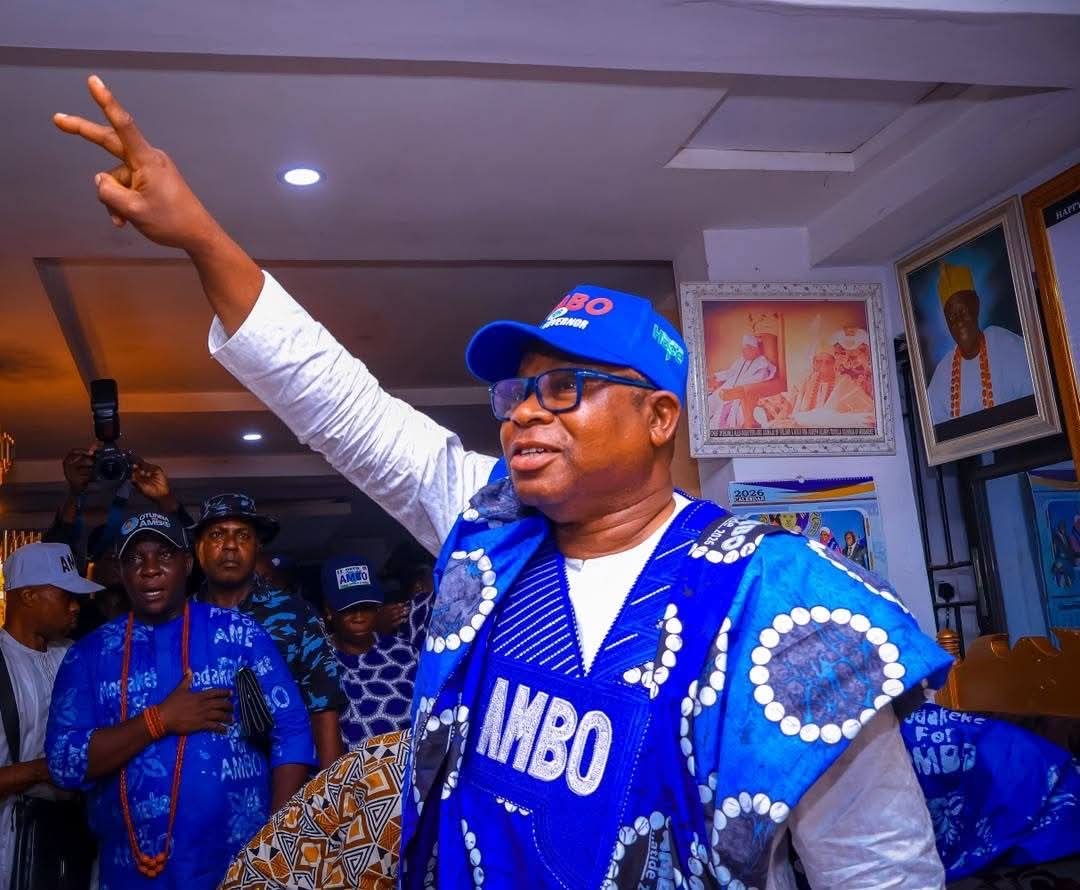
With just days to the Osun State governorship election, All Progressives Congress (APC) candidate, Munirudeen Bola Oyebamiji, has presented himself to voters as a candidate whose principal strength is not political rhetoric, but experience in finance, public administration and investment.
At an Arise News town hall ahead of Saturday’s election, Oyebamiji offered one of his most detailed accounts yet of what an APC administration under his leadership would look like, placing economic management, agriculture, education, healthcare, human capital development and inclusive governance at the centre of his campaign.
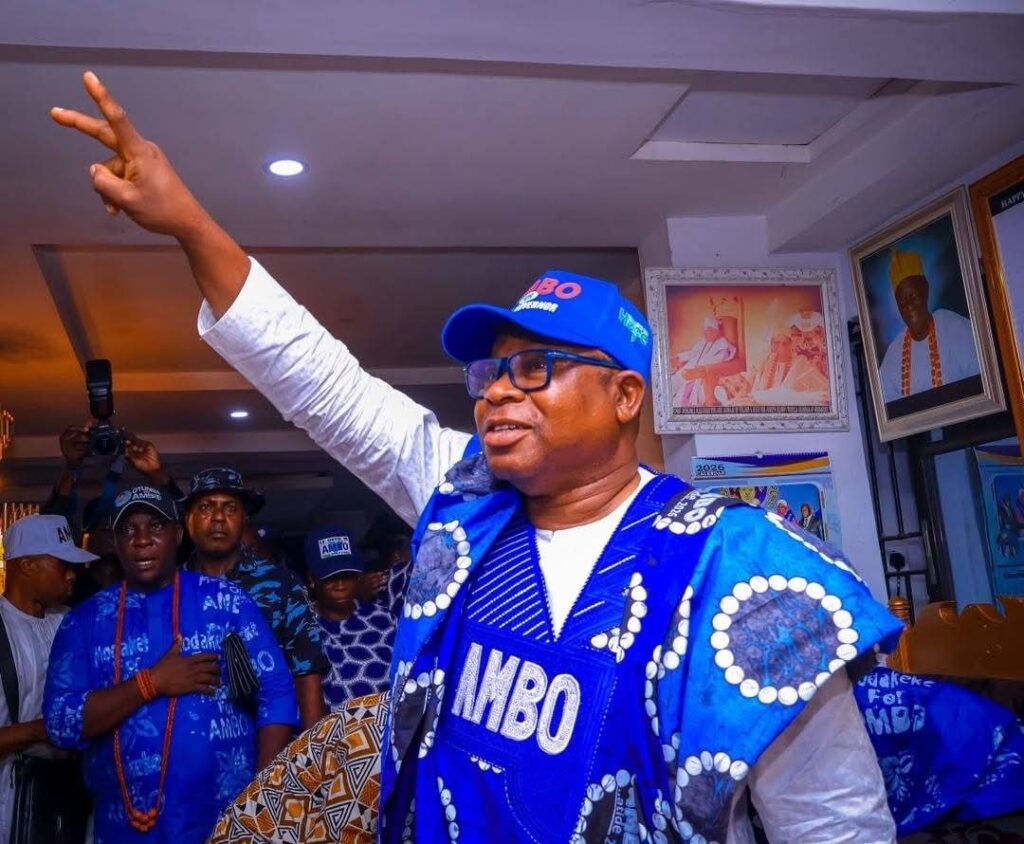
His central message was straightforward: Osun, he argued, has the resources and human capacity to do considerably more, but requires a government capable of converting available resources into measurable improvements in the lives of its people.
That argument has become the defining thread of his campaign.
Oyebamiji is seeking to turn a lengthy career in banking and public administration into a case for the governorship. He told the town hall that he spent 28 years in the banking industry, rising to managerial positions and earning professional qualifications in banking, management and risk management.
He subsequently moved into public service, where he served as Managing Director and Chief Executive of the Osun State Investment Company before becoming Commissioner for Finance. He later served as Managing Director and Chief Executive of the National Inland Waterways Authority.
For Oyebamiji, that trajectory is important because he sees the governorship less as a ceremonial political office and more as a management responsibility.
“Governance is about people,” he told the town hall, stressing that his administration would not concentrate development in one city, community or section of the state.
The distinction is central to his pitch. Rather than presenting himself simply as an opposition candidate seeking to defeat the incumbent administration, Oyebamiji is attempting to persuade voters that his professional background equips him to run Osun as an institution that must balance limited resources with extensive demands.
From banker to political candidate
Oyebamiji’s argument for competence is closely tied to his record in financial management.
One of the most difficult questions put to him at the town hall concerned his tenure as Commissioner for Finance during a period when Osun faced serious fiscal pressure and public workers experienced salary difficulties.
Rather than distance himself from that period, Oyebamiji sought to make his handling of the state’s finances part of his qualification for office.
He recalled his involvement in efforts that resulted in the release of funds owed to the state through the Paris Club process. According to his account, he advised the administration to approach the Federal Government for the release of funds and said the state subsequently received ₦16 billion.
He said his administration then undertook cash-flow planning that helped the state meet salary and pension obligations.
That experience, he suggested, taught him an important lesson about government: resources matter, but the ability to identify available resources, negotiate for them and deploy them efficiently matters just as much.
It is a message that resonates throughout his economic agenda.
Rather than presenting government as an institution that simply waits for monthly allocations, Oyebamiji repeatedly spoke about investment, enterprise and revenue generation.
His experience at the Osun State Investment Company is particularly significant to that argument. He said that when he assumed leadership of the company, it had a negative shareholders’ fund of about ₦300 million, which he said rose to approximately ₦6 billion during his tenure.
The figures are part of Oyebamiji’s broader attempt to establish a connection between his past management experience and his promise to build a more productive state economy.
Agriculture at the centre of the prosperity agenda
If there is one sector that stands out in Oyebamiji’s economic vision, it is agriculture.
When asked which sector he would prioritise in attracting investment, his answer was unequivocal: agriculture.
For a predominantly agrarian state such as Osun, the APC candidate believes the opportunity is not simply to produce agricultural commodities but to build an ecosystem around processing, manufacturing and distribution.
His argument is that agricultural production should feed industries within the state, creating what he described as backward integration.
The objective would be to move beyond an economy in which farmers produce raw materials that are processed elsewhere.
Oyebamiji sees agricultural processing as a route to job creation, industrial development, expanded markets for farmers and increased state revenue.
He also believes his experience as an investment banker gives him an advantage in attracting capital into these areas.
The promise is therefore not merely to spend more on agriculture, but to use agriculture as a platform for wider economic activity.
That approach forms part of what his campaign calls the “Prosperity Agenda”, an economic programme built around investment, employment, enterprise and improved living standards.
Rejecting the idea of Osun as a “civil servant state”
Another significant moment at the town hall came when Oyebamiji rejected the description of Osun as essentially a civil servant state.
His response was rooted in his previous experience at the Osun State Investment Company.
He argued that the state’s economy can be expanded by deliberately creating an environment in which businesses can invest, grow and employ people.
For him, the government must therefore move beyond its traditional role as the largest employer and become an enabler of private enterprise.
He pointed to ease of doing business, investment attraction and agricultural processing as areas where government intervention could unlock economic activity.
The argument comes at a time when the financial position of Nigerian states has changed considerably following the removal of the petrol subsidy and the consequent increase in federal allocations.
Oyebamiji told the town hall that Osun’s monthly revenue inflow is now significantly higher than what was available when he served as Finance Commissioner.
He used that comparison to argue that the state has a greater opportunity today to invest in productive sectors.
Arise News has separately reported his claim that Osun received about ₦650 billion over three and a half years and his argument that the scale of development should be assessed against the resources available to the government.
His proposition is therefore not simply that Osun needs more money. It is that existing resources need to produce greater economic value.
Education and healthcare as human-capital priorities
While economic development occupies a prominent position in his campaign, Oyebamiji also repeatedly returned to the social sectors.
Education, he said, would be one of the pillars of his administration.
He told the town hall that Osun faces what he described as a deficit of about 28,000 teachers and argued that the state’s education system requires substantial investment.
Arise News subsequently reported the same figure from his town-hall appearance, with the APC candidate pledging major investment in education.
Oyebamiji’s education argument goes beyond recruitment
He links education to the state’s long-term human capital, insisting that no serious development strategy can succeed without a functioning education system.
Healthcare occupies a similar position in his plans.
He criticised what he described as inadequate diagnostic infrastructure in the state and promised greater investment in healthcare facilities, equipment and the welfare of health-sector workers.
The underlying philosophy is consistent: government expenditure, in his view, should ultimately translate into better services and improved quality of life.
An inclusive government
Oyebamiji also sought to distinguish his proposed administration from accusations that an APC government would be controlled by political interests outside Osun.
One of the questions at the town hall was whether he would be perceived as simply continuing the influence of former APC administrations or bringing people from Lagos to govern Osun.
His response was to promise an inclusive government.
He said his administration would be transparent and accountable and would ensure that communities across the state benefit from government.
The emphasis on inclusion is significant because Osun’s political contest has increasingly been framed around questions of identity, competence, continuity and change.
Oyebamiji’s response is to present himself as an Osun politician with professional experience rather than as a candidate who needs to be defined solely by the politicians around him.
He also pointed to his extensive grassroots campaign as evidence of his connection with voters.
According to Oyebamiji, he visited the state’s local government structures repeatedly and met party members, community leaders, artisans, traders, civil servants and other groups.
He said these consultations convinced him that voters were looking for a change in government.
Whether that translates into votes will ultimately be determined at the ballot box.
A campaign built around change
The word “change” has become one of the strongest features of Oyebamiji’s campaign.
At the town hall, he repeatedly argued that Osun voters are ready for a new direction.
But his definition of change is worth examining.
It is not presented principally as a personality contest.
Instead, Oyebamiji has attempted to define change through management: better use of public resources, stronger investment, improved public services, greater attention to agriculture, stronger human capital and a more business-friendly environment.
That positioning gives his candidacy a technocratic character.
It also allows him to use his professional history as part of the campaign narrative.
The former banker is asking voters to see the state as an organisation that needs sound financial management, strategic investment and accountable leadership.
Security and institutional government
Oyebamiji’s position on state police also reflected his emphasis on institutions.
Asked how he would prevent the abuse of state police powers, he said the administration would follow the laws, rules and procedures governing the institution.
His answer was significant because security has become an increasingly important issue in Nigerian politics.
Rather than presenting security solely through the language of political power, Oyebamiji framed it around institutional responsibility and due process.
He also condemned political violence and said no political position was worth the life of any human being.
That message fitted into his broader presentation of himself as a candidate who wants to govern through institutions rather than through personal authority.
A candidate asking voters to judge competence
Perhaps the most revealing aspect of Oyebamiji’s town-hall performance was the consistency of his central argument.
Whether discussing education, agriculture, healthcare, public finance or investment, he repeatedly returned to experience and management.
His campaign’s proposition is essentially that Osun needs a governor who understands how money is raised, how businesses operate, how investments are attracted and how public institutions are managed.
That is a different proposition from simply promising a list of projects.
It is a proposition about how government should work.
The test, however, will be whether voters believe his experience can translate into results.
Political campaigns naturally produce ambitious promises, and the electorate will ultimately have to judge the feasibility of those promises against Osun’s fiscal realities, institutional capacity and development needs.
But Oyebamiji has succeeded in putting a clear idea before voters: that the state’s next chapter should be built around productivity rather than dependency, investment rather than consumption, and measurable delivery rather than political slogans.
As Osun heads towards the August 15 governorship election, that message is now at the heart of the APC candidate’s bid to become the state’s next governor.
Oyebamiji left the town hall with an expression of confidence, saying he expected to emerge victorious.
The final decision, however, belongs to the people of Osun.
For the APC candidate, his case is that the state does not merely need another political administration. It needs a government capable of converting its people, resources and economic potential into prosperity.
And he believes his three-decade journey through banking, investment and public administration has prepared him to do precisely that.