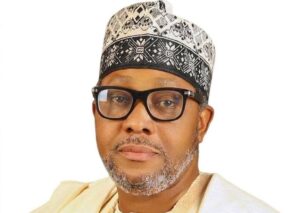
Alhaji Lateef Kayode Jakande was not just a political figure; he was a movement in human form — a quiet revolutionary whose leadership reshaped Lagos State and set a standard for public service in Nigeria. Born on July 23, 1929, in the Epetedo area of Lagos Island, Jakande’s life journey reflected discipline, humility, and an unwavering commitment to societal progress.
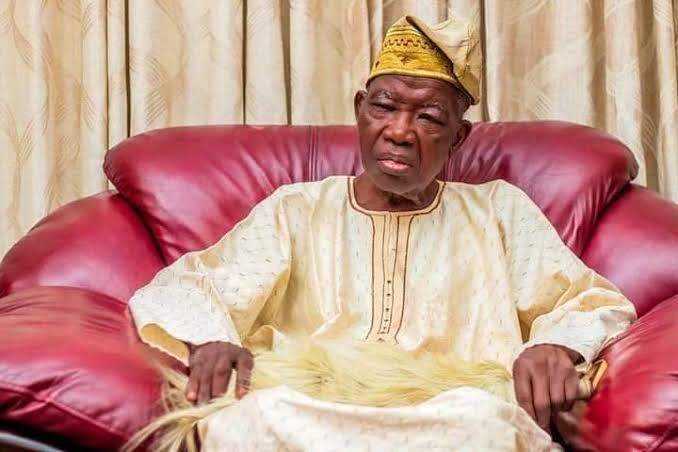
Before politics, he built a distinguished career in journalism. Beginning in 1949, he rose through the ranks to become Editor-in-Chief of the Nigerian Tribune and later the first President of the Newspaper Proprietors Association of Nigeria. In the newsroom, he sharpened his belief that leadership must serve the people and that truth and accountability are foundations of national growth. Journalism did not just give him a profession; it gave him purpose.
In 1979, that purpose found a larger platform when he became the first civilian Governor of Lagos State during Nigeria’s Second Republic. His administration, though lasting only four years before the 1983 military interruption, delivered results that decades later remain visible across Lagos.
Jakande governed with clarity of vision. He believed education was not a privilege but a right. Under his leadership, Lagos introduced free primary and secondary education, abolished the shift system, and built over 22,000 classrooms within four years. He established Lagos State University and strengthened teacher training institutions, expanding access to learning for thousands of young people. For many families, his policies opened doors that had long been closed.
Housing was another pillar of his mission. Recognising the urgent need for affordable homes, his administration constructed tens of thousands of low-cost housing units across estates such as Abesan, Amuwo-Odofin, Dolphin, Ijaiye, and other parts of the state. These were not symbolic projects; they were practical solutions that gave ordinary families stability and dignity.
In healthcare, Jakande expanded and upgraded general hospitals and health centres across Lagos, making medical services more accessible to communities that had previously been underserved. His belief was simple: governance must improve the daily lives of citizens.
His impact extended beyond social programmes. He oversaw the construction of the Lagos State Secretariat at Alausa, the House of Assembly complex, Lagos Television, Radio Lagos, expanded road networks, improved water supply systems, and initiated the ambitious metroline project — a forward-thinking mass transit plan ahead of its time. Even though the metroline was halted after the military takeover, it demonstrated his visionary approach to urban development.
Perhaps even more powerful than the structures he built was the example he set. Jakande lived modestly, maintained personal discipline, and was widely regarded as a leader who placed service above self. He was affectionately called “Baba Kekere,” not because of political theatrics, but because people felt his leadership at the grassroots level.
His legacy is not merely historical; it is instructional.
As a filmmaker and storyteller, I am compelled to bring this legacy to life through “Baba Kekere the Biopic.” Today’s young generation deserves to encounter models of leadership rooted in integrity, discipline, and genuine service. At a time when cynicism often surrounds public office, Jakande’s life reminds us that governance can be compassionate, visionary, and transformative.
This film is not just about revisiting the past. It is about equipping young people with an example of what purposeful leadership looks like. Jakande’s story teaches that one individual, guided by principle and courage, can reshape systems and impact generations.
Alhaji Lateef Kayode Jakande did not simply govern Lagos; he left behind a blueprint — one that challenges leaders and inspires youth to pursue service with honesty, humility, and unwavering commitment.
That is why his story must be told.