
The Return We Waited For
By Adeleke Babatunde
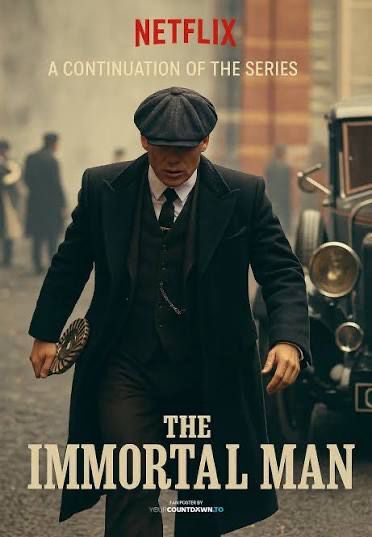
After six seasons of razor-edged drama on the cobblestoned streets of Birmingham, Steven Knight finally brings Tommy Shelby’s story to the big screen. Peaky Blinders: The Immortal Man, directed by Tom Harper and released theatrically on March 6, 2026 before landing on Netflix on March 20, is the culmination of over a decade of one of television’s most stylistically audacious crime sagas. The question was never whether it would look and sound extraordinary. It was whether a 112-minute film could do justice to a universe that once had 36 episodes to breathe in. The answer is complicated, thrilling, and occasionally frustrating.
The Plot
Set against the Blitz and a Britain under mounting wartime pressure, The Immortal Man finds Tommy (Cillian Murphy) living in self-imposed isolation, hollowed out not only by the events of the series but by more recent losses that have pushed him even further from the world he once controlled.
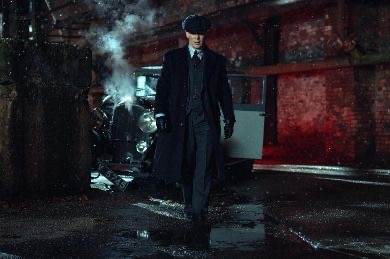
When he hears that his son and successor “Duke” Shelby is entangled in a conspiracy that could decide the war in favour of the Nazis, he travels back for one last battle, to save his kin and maybe even his country in the process. Knight’s pitch of a conspiracy involving counterfeit bills flooding and decimating the UK economy is actually based on real historical events, and wrapping it into a very personal tale involving Tommy’s return was a clever manoeuvre, immediately gifting this feature outing a sense of scale and importance.
Barry Keoghan takes on the role of Duke Shelby with considerable charisma, the kind of brooding, coiled energy that recalls a younger Tommy. Keoghan does a good job of matching Murphy’s reptilian poise in the troublesome offspring role. But the two actors never really strike sparks in the way you’d hope, and though the narrative delivers some seismic plot events, it doesn’t fully deliver on the promise of its generational clash.
Where the film truly shines is in its quieter, more introspective moments. For a film that so sharply introduces a Nazi threat early on, there is a studious aversion to cheap thrills or easy humour. Those expecting a simple face-off of Peaky Blinders versus the Nazis will doubtlessly be surprised by the movie-length wait for full engagement. In its ruminative spirit, the film is more concerned with the repercussions of lifelong violence, as Tommy’s mental health regularly rotates to the fore while he confronts loneliness, loss, trauma and guilt.
That introspection is both the film’s greatest strength and its most divisive quality. Casting the antagonists as Nazis feels dramatically lazy, if undeniably efficient. One of Peaky Blinders’ great strengths was its ability to place Tommy and his family in morally compromised conflicts against rivals who were often as charismatic, wounded, or ideologically complex as they were. Here, there is little ambiguity at all. The show was always at its best when you weren’t entirely sure who to root for. That moral fog is largely absent here.
The film’s plot writing also unfolds predictably. Most of the twists will not shock viewers, and those that do have little grounding in the narrative. Still, The Immortal Man forges a leaner 112-minute effort that delivers on both small and large scale, with explosive setpieces and snapshots of the Blitz giving Tommy the closure we didn’t know we needed.
The Music
This is where the film is unimpeachable. The 36-track soundtrack combines an intense original score from series veterans Antony Genn and Martin Slattery with fresh contributions from Grian Chatten of Fontaines D.C. and a re-recorded “Red Right Hand” by Nick Cave, alongside other post-punk and folk-infused pieces.
Nick Cave’s “Red Right Hand” has been the sonic signature of Peaky Blinders since its very first episode, and its return here hits like a thunderclap. The newly recorded version, titled “Red Right Hand (Immortal),” brings the iconic theme back for the final chapter with a weight that feels genuinely elegiac, as though even the music knows this is goodbye.
Grian Chatten’s original contribution “Puppet” is a standout, as is his collaboration with Lankum on “Hunting the Wren (The Immortal Man version).” Chatten’s voice carries the same weathered, post-industrial soul that has always defined the show’s sound: raw, mournful, and deeply Irish in spirit. Amy Taylor of Amyl and the Sniffers also contributes, adding a grittier, more abrasive texture to the mix. The score never overwhelms the drama. It underlines it, pressing into the silence between scenes with the kind of musical intelligence that has always separated Peaky Blinders from its contemporaries.
The Verdict
Peaky Blinders: The Immortal Man is not the towering cinematic statement some fans dreamed of. With its edgy style intact, it never takes its eye off the Peaky faithful, but keeping the fans happy is a double-edged sword, as it can’t help but feel like an extra-long episode rather than a standalone cinematic experience. And yet, there is something deeply moving about watching Cillian Murphy inhabit Tommy Shelby one final time, carrying thirteen years of accumulated grief across every frame. The music soars, the visuals are as immaculate as ever, and for fans who have invested in this world, the emotional payoff is real. It is an imperfect farewell, but a farewell nonetheless. By order of the Peaky Blinders, it will do.