by Jennette McCurdy
A Book Review By Adeleke Babatunde
Genre: Memoir | Published: August 9, 2022 | Publisher: Simon & Schuster
Overview
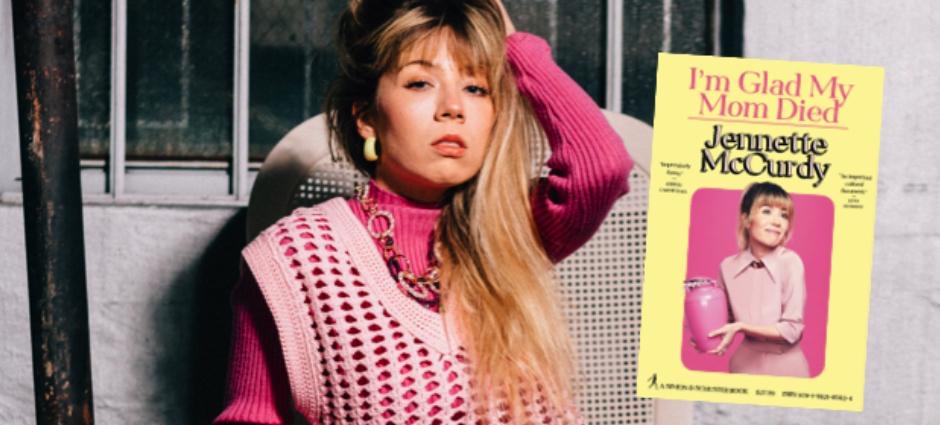
I’m Glad My Mom Died is a 2022 memoir by American writer, director, and former actor Jennette McCurdy, based on her one-woman show of the same name. It chronicles her career as a child actress and her profoundly difficult relationship with her abusive mother, who died in 2013. The book spent over 60 consecutive weeks on the New York Times bestseller list for paperback nonfiction. That kind of sustained commercial success is rare for a debut memoir and speaks to how deeply the book resonated with readers far beyond McCurdy’s existing fanbase.
The Story
McCurdy’s entire identity is shown to be inextricably linked with her difficult, often traumatic, relationship with her mother, Debra. Debra’s control over McCurdy’s life is so complete that it extends even beyond Debra’s death from cancer when McCurdy is 21. It is not until years later that McCurdy starts to recover from her childhood in earnest.
The memoir is structured roughly in three phases. McCurdy recounts her life starting from the age of six, detailing how her mother shaped her existence by forcing her into an acting career, teaching her how to diet to maintain a low weight, and constantly invading her privacy. Her childhood and teenage years revolve around complex family relationships and the strain of Hollywood life.
Her mother enforced calorie restriction from a young age, made her weigh herself multiple times a day, criticised her appearance, showered with her until she was 16, and controlled her diaries, emails, and income. These violations are recounted not with theatrical outrage but with a kind of stunned, matter-of-fact clarity that makes them all the more disturbing to absorb.
McCurdy was raised in a Mormon household and was homeschooled by her mother, a woman who wanted to always present a perfect image and often lashed out hurtfully. McCurdy is open about her mother having narcissistic tendencies, and while she makes it clear she very much loved her mother, the scars are quickly apparent.
The middle section of the book covers her rise to fame on Nickelodeon. Cast in iCarly, she is thrust into the spotlight. Though her mother is ecstatic, Jennette is riddled with anxiety, shame, and self-loathing, which manifest into eating disorders, addiction, and a series of unhealthy relationships. She also describes a strained relationship with a Nickelodeon producer she refers to only as “The Creator,” whom various sources speculated to be Dan Schneider.
The final section is the most harrowing in some ways, because it chronicles what happens after the anchor of abuse is removed. After her mother’s death, McCurdy’s difficult childhood and its lasting negative effects begin catching up with her. She starts going to a therapist and life coach named Laura, who helps her take stock of her life, determining that she is bingeing and purging five to ten times a day and drinking eight to nine shots of hard alcohol a night. Laura helps McCurdy understand that she is bingeing and purging as a way to relieve anxiety caused by pent-up emotions, and that the act essentially functions as self-medication.
Themes
Maternal Abuse and Enmeshment. The book’s central and most complex thread is the mother-daughter relationship. McCurdy came to the realisation that her mother was her first and most significant bully, yet the pedestal on which she had placed her kept her emotionally stunted, living in fear, dependent, and in a near-constant state of emotional pain, without the tools to even identify that pain, let alone deal with it.
The Dark Side of Child Fame. McCurdy’s book is revealing about the abuse she endured from her mother, who pushed her into acting at age six, but beyond that it is a measured, heartbreakingly poignant, and often darkly funny memoir. What is perhaps most important is just how much hope and help it will surely provide to those suffering similar abuses right now.
Eating Disorders and Recovery. McCurdy’s struggles with eating disorders and body image, fostered by her mother and worsened by her life in the spotlight, do not disappear once her mother is no longer there to control her. She undergoes a lengthy and difficult recovery process in the second half of the book, which involves seeking out counselling and acknowledging how her mother’s actions harmed her. It is worth noting that the recovery narrative occupies only a small portion of the book. The vast majority is made up of in-depth descriptions of illness, which makes it a potentially triggering read for anyone with an eating disorder, despite the overall message of hope.
Identity Beyond Performance. A key turning point in the memoir is McCurdy declining the iCarly reboot and quitting acting for writing, representing her reclaiming of her own narrative. The memoir itself is the proof of that reclamation.
Writing Style
McCurdy has a very distinctive writing voice. As she grows older throughout the book, her prose shifts from the more simplistic thoughts of a child to the reflective musings of an adult, allowing readers to immerse themselves in her emotions at each stage. Her dry humour, her choice to write in present tense, and the short length of the chapters make it surprisingly easy to get through despite its heavy subject matter.
The startling authenticity with which she discusses her past makes it clear she is committed to the memoir’s excellence. One heartbreaking thread in the book concerns McCurdy’s earliest attempts at writing, which her mother actively discouraged. It is quietly triumphant to read those passages in the context of the book’s enormous success.
A Note of Caution
This is a grim read, albeit one with a dark sense of humour throughout. If you have an eating disorder or are in recovery from one, this book is intensely triggering and does not shy away from anything. Content warnings apply for abusive parenting (physical, emotional, and sexual), eating disorder descriptions in intense detail throughout, sexual harassment, cancer, and mental illness.
Final Verdict
I’m Glad My Mom Died is one of the most unflinching memoirs to emerge from the world of celebrity in years. It refuses the usual redemption-arc packaging and instead sits with the mess and contradiction of real recovery, real grief, and real anger. McCurdy does not ask for your sympathy, but she earns it on almost every page. Whether you grew up watching iCarly or have never heard of Jennette McCurdy before picking it up, this book has the power to reframe how you think about the adults in charge of children’s lives, both on and off screen.