”We look down on small beginnings that build empires because we mistakenly believe dignity comes from job titles rather than honest work.”
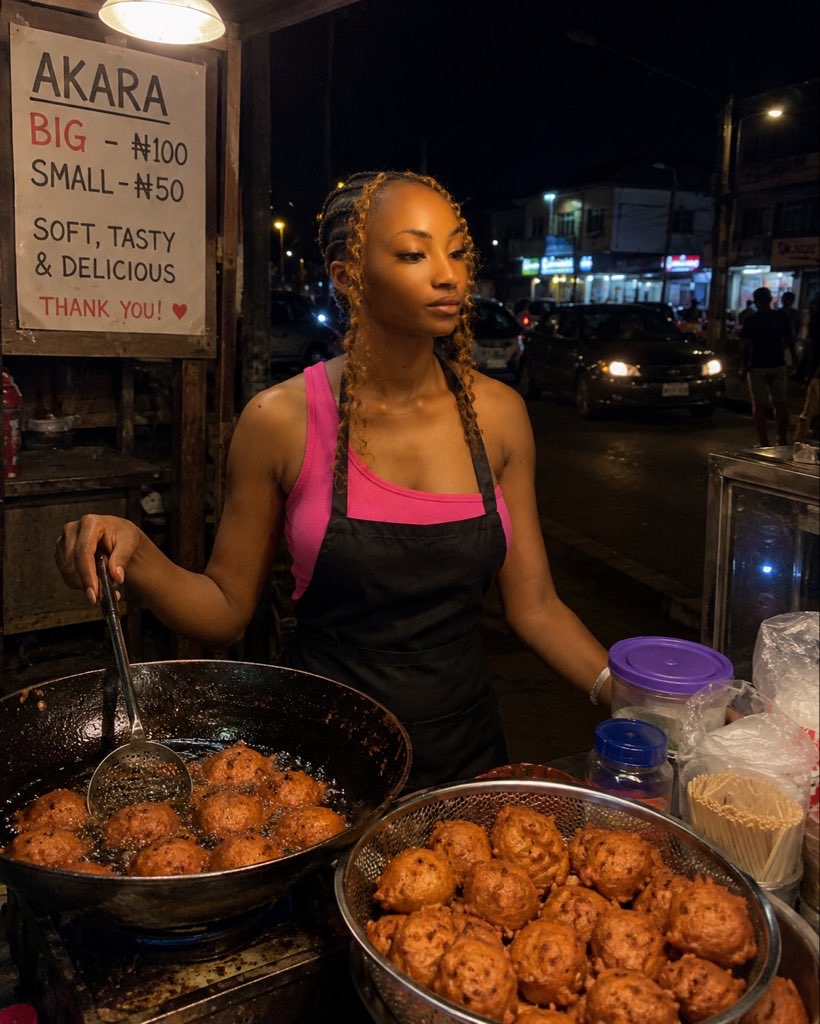
Recently, First Lady Remi Tinubu is once again at the centre of a social media uproar. Her alleged offence? Suggesting that Nigerians should consider small businesses like selling akara, roasting corn, or making kuli-kuli—ventures requiring minimal capital, while the government provides grant. The backlash was immediate and harsh. “This insults Nigerians,” one user claimed. Another accused her of offering “crumbs from a shattered table.”
I smiled as I read the comments, because here’s the harsh reality the outrage often ignores: the akara vendor in your neighbourhood might earn more than the office graduate.
The Facts Are Clear, Nigeria’s informal sector is not a minor part of our economy—it is the economy. It makes up about 65% of GDP and employs over 80% of the workforce. They’re the major players; who drive Africa’s largest economy. The 2024 Informal Economy Report states that 72.3% of informal businesses make over ₦1 million monthly.
Think about that, in an empirical manner, the woman frying akara by the roadside or roasting corn at the bus stop often brings in more than a million naira each month. The profit margin on akara alone exceeds 50%. A while ago, in Kano, one seller reported earning between ₦8,000 and ₦10,000 daily before Ramadan, with earnings rising during busy seasons. Monthly, such a business can profit ₦200,000 or more depending on customers. Now let’s Compare that to the average entry-level salary in Lagos’s formal sector which is often ₦50,000 to ₦150,000 monthly. The akara seller is out-earning the university graduate, yet we reserve our contempt for the former and our sympathy for the latter. Why?
Nigerians of this generation, befriend Selective outrage, tho this is not the first time Nigerians have reacted this way. When Maryam Babangida launched the Better Life Programme for Rural Women in 1987, it was initially praised but later criticised for unaccounted funds and claims that elites hijacked it. When Buhari’s administration introduced TraderMoni—offering ₦10,000 interest-free loans to petty traders—it was dismissed as vote-buying and politicised. The pattern is clear: efforts to help the poor through small businesses are met with cynicism, while grand promises that often remain unfulfilled are celebrated.
I want us to Consider Colonel Harland Sanders. Who at 65, began franchising his chicken using his $105 monthly Social Security check. Today, KFC has over 15,000 outlets worldwide. He started with a roadside café in Kentucky—the 20th-century equivalent of an akara stand. No one told him frying chicken was beneath his dignity.
Had Nigerians applied the same logic to Colonel Sanders as they do to Remi Tinubu’s advice, KFC might never have existed. It would have been seen as an insult to Americans, and more ‘worthy’ jobs would have been demanded instead. But real jobs don’t just appear; they are built from real businesses—often starting with a pot of oil and a sack of beans.
We should not forget that Nigeria Is Poor—And That Is Not an Insult, It Is a Fact! The World Bank reports that the percentage of Nigerians living below the poverty line increased from 56% in 2023 to 63% in 2025, roughly 140 million people. With 93% in informal employment and only 7.8% in formal jobs, dismissing petty trading as insignificant is both elitist and unrealistic.
The informal sector reflects the reality that Nigeria’s formal private sector cannot generate enough jobs. Each year, about 3.5 million young Nigerians join the workforce. Will they find jobs in the formal sector or turn to street vending—selling akara, roasting corn, and creating opportunities from little?
However, critics aren’t wrong to complain about inflation at 15.93%, rising fuel prices, and increased costs for 79% of small business owners. These are valid issues. But the outrage is misdirected. The First Lady’s message—that small businesses are vital, that grants (not loans) are available, and that Nigerians should consider petty trading—is not the core problem. The issue is the messenger. Nigerians aren’t upset at the advice but at who delivered it.
If a well-loved figure had said the same thing, reactions might be different. Distrust of the government fuels the outrage, not disagreement with the message. Yet dismissing small-business initiatives as insults doesn’t create jobs, lower prices, or feed families.
We’ve romanticised big businesses and looked down on small ones for too long. We celebrate Dangote but mock akara sellers, forgetting that Dangote started with trading. We praise foreign investors but look down on local traders, who employ more Nigerians than all multinationals combined.
The First Lady’s message isn’t wrong. Nigeria is poor. Small beginnings can lift people out of poverty. There’s dignity in earning honestly—whether from a corporate office or a frying pan.
The real question isn’t whether Akara is respectable, but why we prioritise the messenger over the message. Until we answer honestly, we will keep despising the very things—and the very akara—that could help save us.
Demoshood Writes from Lagos.