
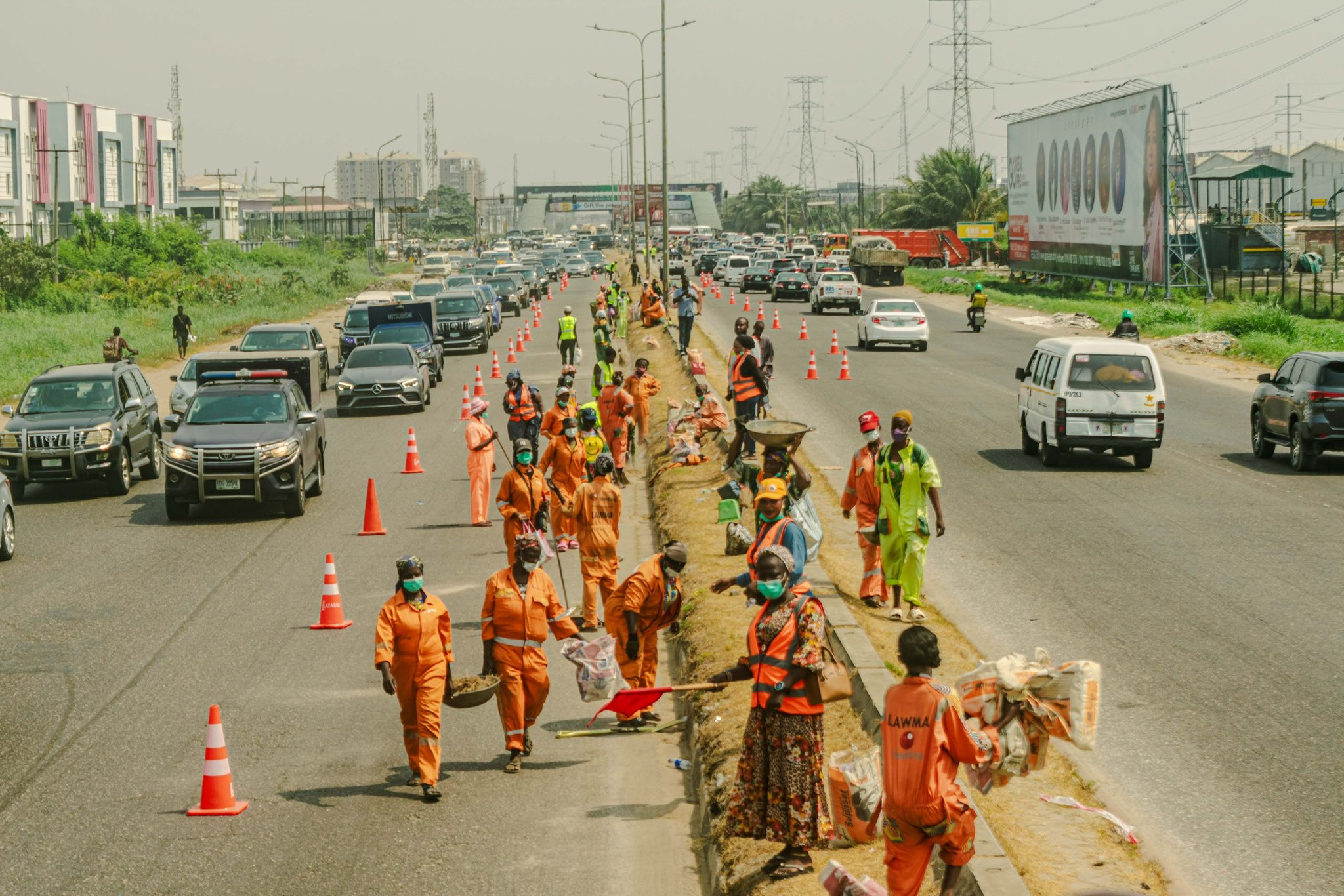
… LAWMA MD says sanitation is a chain, and every link must work for lasting cleanliness
Mercy Ejibunu
Six days after World Cleanup Day, the Lagos State Government on Saturday held its monthly environmental sanitation exercise, with activities taking the team to Oshodi.
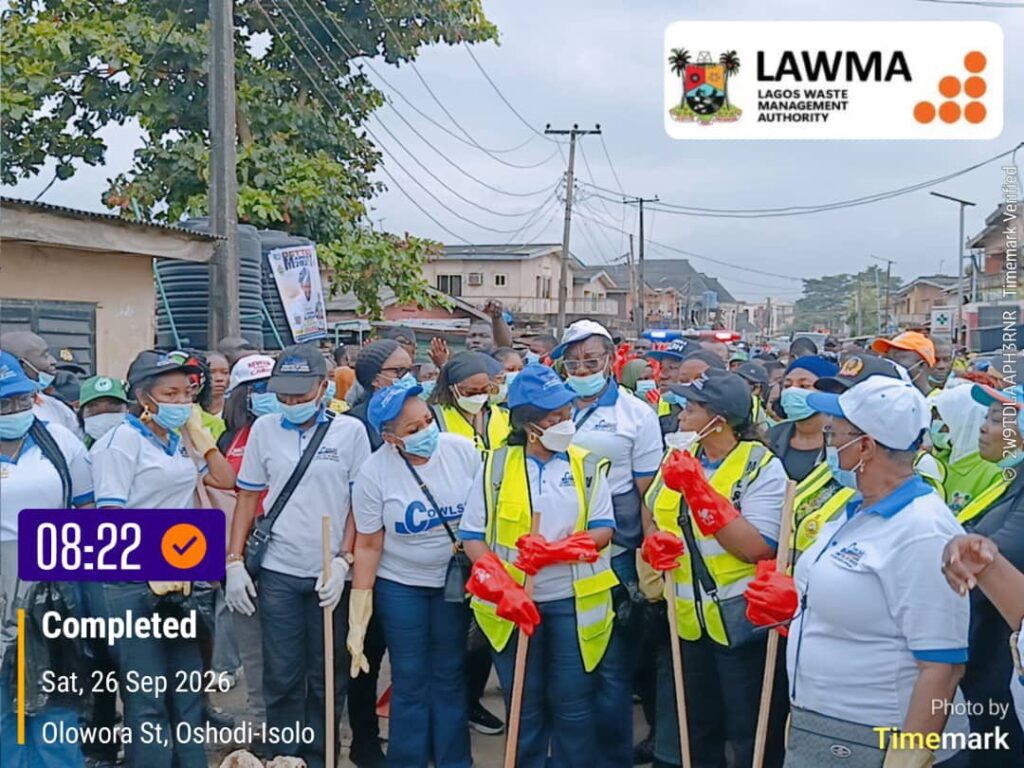
The exercise, which drew participation from residents, traders, community leaders, and government officials, was used to highlight the importance of sustaining environmental cleanliness beyond a single day of collective action.
Speaking during the exercise, the Managing Director and Chief Executive Officer of the Lagos Waste Management Authority (LAWMA), Dr. Muyiwa Gbadegesin, noted that Oshodi was an important place to make the point, as parts of the community have been experiencing challenges with regular PSP waste collection.
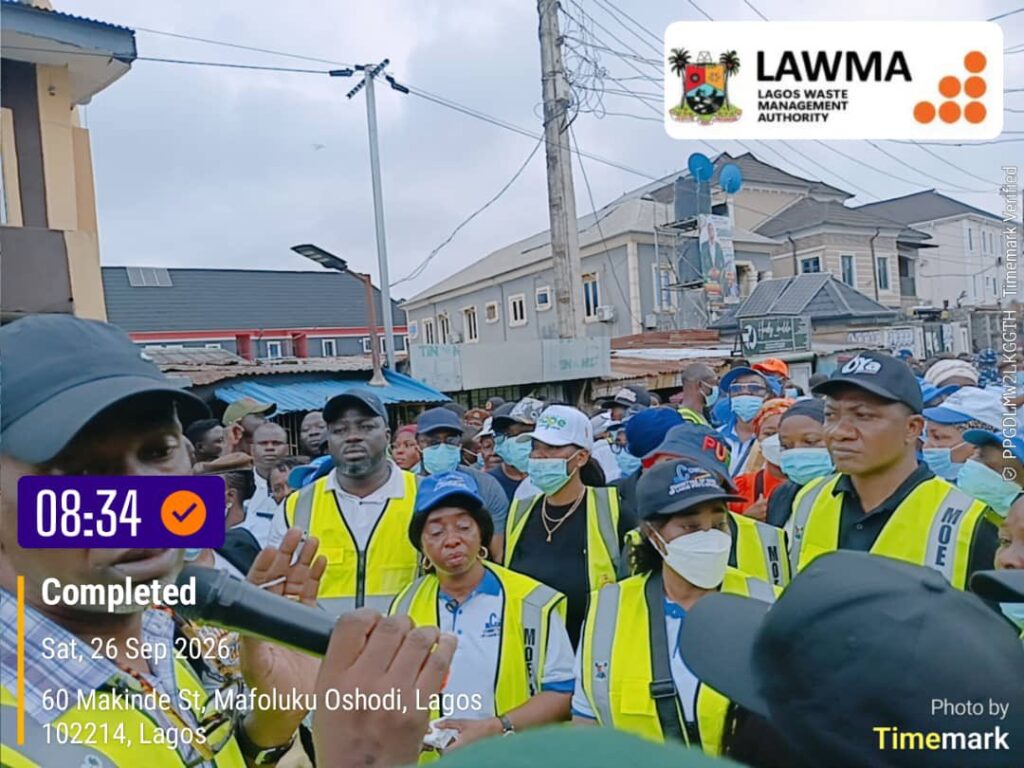
He explained that cleaning the streets addresses only one part of the problem, describing urban sanitation as a chain involving cleaning, containment, collection, evacuation, and safe disposal. “If one link fails, the waste eventually returns to the street,” he said.
Gbadegesin explained that the reintroduction of the monthly environmental sanitation exercise by the Lagos State Government was designed to create a regular period for households, markets, businesses, and communities to clean their premises, public spaces, and drainage channels.
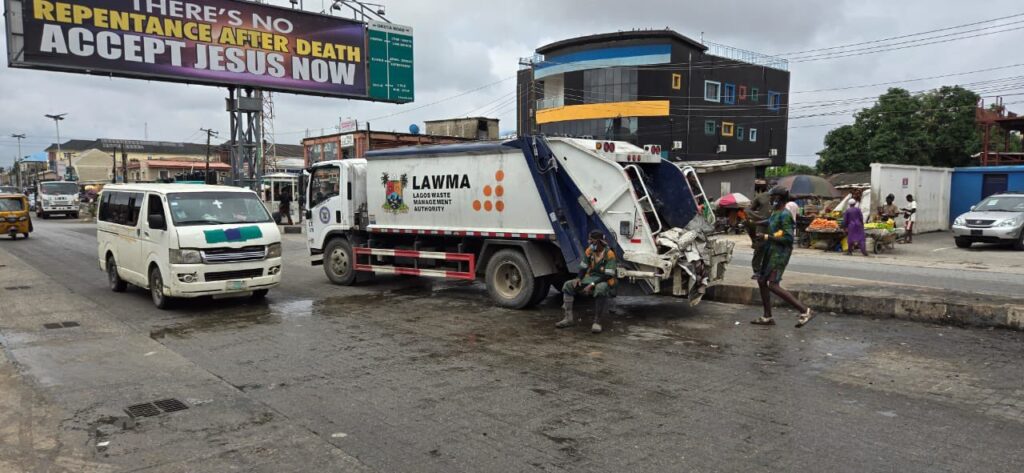
He noted that keeping litter and waste out of drains helps preserve drainage capacity and reduce environmental and flooding risks. The exercise also provides an opportunity for the government to identify, at street level, where the sanitation system itself is failing.
The LAWMA MD emphasised that while residents have a responsibility to keep their surroundings clean and dispose of waste properly, the public waste system has a corresponding responsibility. He stated that PSP operators must arrive when expected, collected waste must be evacuated promptly, disposal infrastructure must remain accessible, and recurring service failures must be detected and corrected. “A pile of waste cleared at 8:00 a.m. is not success if it is back in the same location two weeks later,” he said.
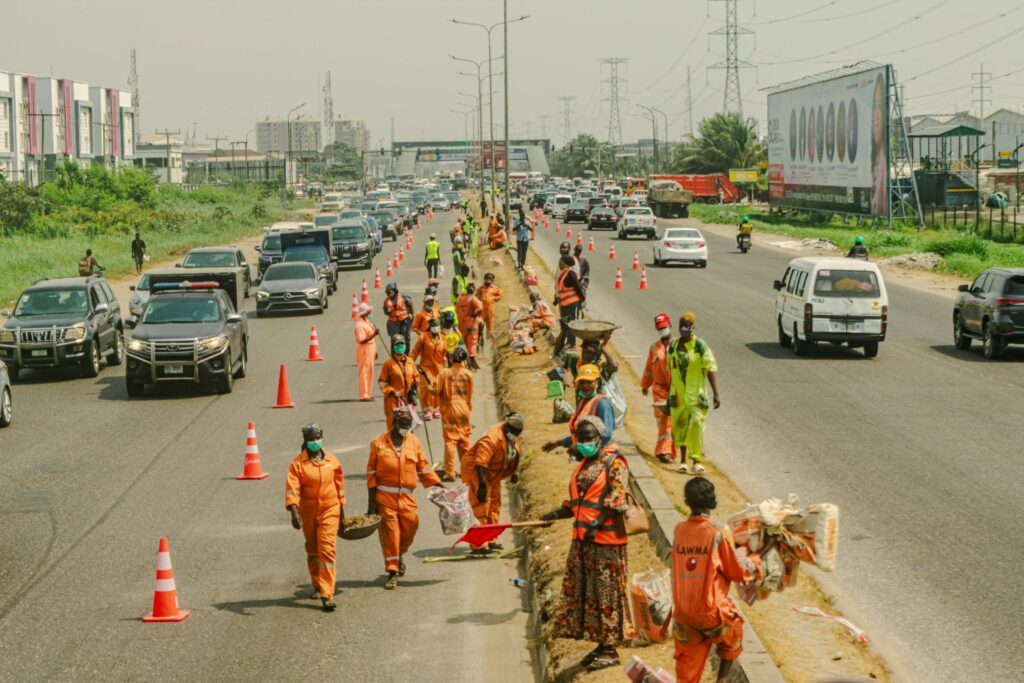
Gbadegesin disclosed that the monthly exercise will do more than remove accumulated waste. It will help the government identify blackspots, blocked drains, weak collection routes, communities with unreliable PSP service, and locations where behaviour, enforcement, or infrastructure requires attention. Each exercise, he said, should leave behind a more dependable arrangement than it found.
The LAWMA MD noted that while World Cleanup Day reminds us of the power of collective action, the real objective is neither a cleaner Saturday nor a good photograph. “The real test is the same street on an ordinary Tuesday, and the same location one month later. That is the standard that we will continue to measure,” he said.