… Dr. Muyiwa Gbadegesin on 13,000–16,000 tonnes of daily waste, biogas plants, illegal cart pushers, and why Lagos needs a new waste management system
Babajide Fadoju
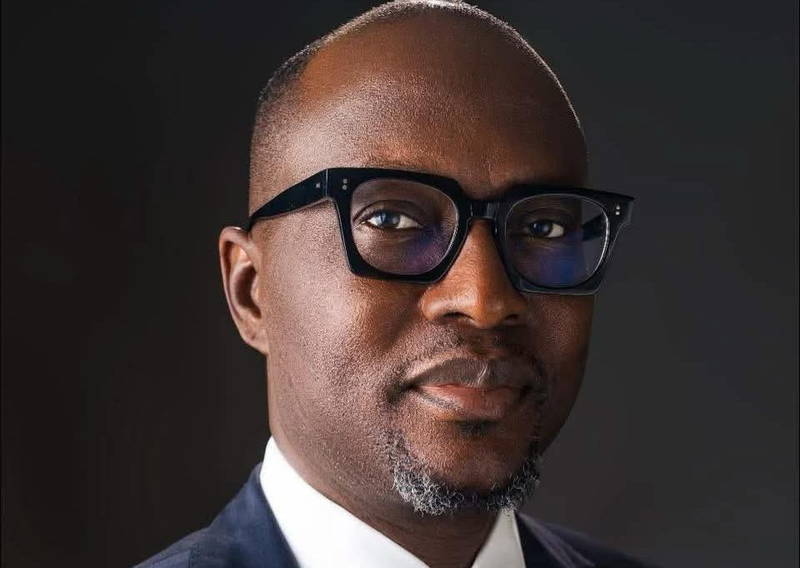
Amid the current waste crisis across Lagos metropolis with the attendant health risks, Dr. Muyiwa Gbadegesin, the Managing Director and Chief Executive Officer of the Lagos Waste Management Authority (LAWMA), speaks on refuse heaps, infrastructure gaps, new waste management systems, enforcement, and the way forward for Lagos.
Lagos has been facing infrastructure deficit in waste management in recent times. What are the challenges and interventions being deployed?
Lagos is a rapidly growing megacity of about 22 million people. We generate between 13,000 to 16,000 tonnes of waste daily. To manage that, you need significant investment across the entire value chain of waste management, which starts with containerisation of waste using bins, collection by compactor trucks, and then treatment and disposal at facilities. By the end of this year, we expect the Transfer Loading Stations (TLS) to be completed, and the Materials Recovery Facilities (MRFs) to be ready by the first quarter of next year. At that point, we can close down Olusosun, where one section is already closed.
In the area of treatment and disposal, we have a five-year project to build a biogas plant in partnership with LAMATA, funded by the government of Sweden. Since 1942, Stockholm has been treating organic waste to produce biogas for cooking, heating, and public transport. We are replicating that model in Lagos. With LAMATA bringing in 2,000 CNG-powered buses, the plan is to power them with biomethane produced from our organic waste, which makes up 50 per cent of the waste we generate daily.
We have also started installing biodigesters at markets with high organic waste volumes. We launched a pilot project at Ikosi Fruit Market in February, and we want to place similar digesters at Alamutu, Mile 12, and Afolabi Ege markets. These facilities will convert plantain stalks and other organic waste into biofertiliser. There is no point burying that in a landfill.
What are you doing to improve waste collection and containerisation?
We have about 80,000 smart bins, but adoption has been slow. We are now looking at distributing them free to households and adding a small amount to the monthly bill to pay them off. By the end of this year, we are expecting 150 new compactor trucks—two per local government and LCDA, plus 36 from the state government. This will form a new unified waste management fleet managed jointly with local governments. Our target is to have 2,000 trucks eventually.
We are also redesigning the PSP programme. We are working with the Ministry of Environment, the House of Assembly, and the Association of Waste Managers to make it more efficient and responsive. I’m not prepared to go into too much detail yet, but there are internal planning discussions ongoing.
What about the human factor and enforcement?
Human behaviour is a major challenge. In a city of 22 million people, not everyone will comply. We have people coming into Lagos every day—climate migrants fleeing insecurity and natural disasters. In the last two years, I have seen a doubling of the population sleeping on sidewalks. Many are on drugs. That is a major problem.
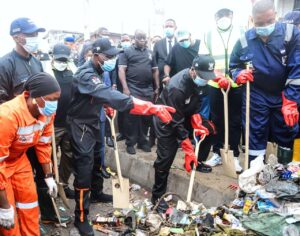
We do continuous advocacy, working with CDAs, CDCs, and local governments. But there are still a lot of violations. That is why we have expanded our enforcement operations. The most visible in recent months is the major enforcement along the Badagry Expressway, where an initial census found over 10,000 people living on the median, selling goods and even sinking a borehole. We have been there for over a month, working with RRS, the Task Force, KAI, and the military. The operation is moving well, and we are determined to clear that corridor.
We have shut down markets that deliberately flout regulations, and we will continue to do that. Waste that is not cleared promptly can lead to disease outbreaks, block drainage, and cause flooding. We cannot allow a few people, for their own convenience or economic interest, to dump waste indiscriminately.
What is the role of the Waste Investigation, Surveillance and Enforcement Unit?
Every incident of illegal dumping has a different reason. That is why we established the Waste Investigation, Surveillance and Enforcement Unit. Their job is not just to clear waste, but to trace where it is coming from and why. They mark cleared areas with caution tape, engage the community and PSP operators, and find out who is complying and who is not. That way, we can stop the waste leakage at its source.
We have asked each local government to set up a waste management task force with representatives from LAWMA, CDAs, PSP operators, and environmental health officers. They are expected to meet monthly to resolve waste issues. Local governments have also been buying compactor trucks, and we are licensing them to run their own collection systems. For areas where compactor trucks cannot access, we are introducing tricycle compactors—already working in Ibeju-Lekki, Lagos Island, and Badagry. Residents pay N800 per bag via POS. The tricycles bring waste to a compactor, which takes it to a TLS. This is a sustainable, pay-as-you-go system.
We are also working with local governments to establish mini-TLSs in each area, where tricycles can dump waste and our big trucks evacuate it. We have given them designs and asked them to identify land. The goal is to have the mini-TLS ready before the new trucks arrive.
How do you manage PSP operators who default?
We do a monthly performance audit of all PSPs statewide. We check if their trucks are working, if they are coming as scheduled, what customer feedback is, and how many times they dumped at the landfill. They get a score. If they fall below, they get a query. After three queries, we can withdraw their licence. Last year we withdrew about 27 licences out of 450, and more this year. That is why there are gaps in some areas, and we are working with local government chairmen to provide backup.
What should residents do when they have complaints?
Residents can reach us directly on our free call lines: 07080601020 and 08000052962. They can also email us at info@lawma.gov.ng with their payment receipt attached. We want to work with credible private sector players who can help solve these problems. If you have expertise or interest in any of the services we need to provide, reach out to us.
We also appeal to Lagosians for understanding. We know there are complaints about delayed collection, but we are working hard to fix the system. The goal is to have a clean, healthy, and sustainable Lagos for everyone.
Which areas are worst hit by waste buildup?
Alimosho, Amuwo-Odofin, Ojo, Ikorodu, and Lagos Island councils are the most affected. Generally, fast-growing and heavily built-up urban areas are under pressure. In GRAs and estates with organised payment, there is less pressure. But in areas with poor road access, tricycle collection makes more sense. Those are our targets.
What about the issue of PSP trucks causing traffic by parking indiscriminately?
That is one of the things we query them for. Some drivers park and start sorting waste on the road, which is against the rules. We will continue to do advocacy and we encourage residents to report such incidents to our toll-free lines. We will act on every report.
What is the way forward for Lagos?
We are building a new waste management system based on circular economy principles. With the new TLS, MRFs, biogas plant, 150 new trucks, and the expansion of tricycle collection, we are moving toward a system where nothing is wasted. We are also catching them young through the LAWMA Academy, where children learn about waste-to-wealth and circular economy. The summer school opened last Monday, and the kids are already building things out of waste.
We are determined to make Lagos a cleaner, healthier, and more sustainable city. But we cannot do it alone. It requires the cooperation of all Lagosians—residents, businesses, local governments, and the private sector. Together, we can build a Lagos we can all be proud of.